Crisis Leadership, Restructuring, and the Innovation Imperative
In recent work, I conducted a study on crisis response together with my colleagues Killian McCarthy and Arjan Groen, in which we identified seven key capabilities—what we term the 7C’s—that organizations should develop to elevate crisis preparedness. Now published as Aalbers, R., McCarthy, K., & Groen, A. (2026). Level Up Your Crisis Management Skills. MIT Sloan Management Review, 67(2), we show that effective crisis leadership is not a matter of instinct, but of systematically developed competencies that shape how organizations anticipate, respond to, and learn from disruption.
At its core, a crisis is rarely the fundamental problem. Rather, it exposes what was already misaligned within the organization: fragmented decision-making, excessive complexity, or a lack of strategic focus. Crisis response, therefore, should not be seen as an isolated managerial task, but as a revealing moment—one that brings underlying organizational strengths and weaknesses to the surface. As set of competencies that we reflect on here in further detail:
Aalbers, R., McCarthy, K., & Groen, A. (2026). Level Up Your Crisis Management Skills. MIT Sloan Management Review, 67(2). Summer issue.
These competencies thus are not to be seen as standalone capabilities. Their effectiveness really depends on how they are embedded across the organization, and on the maturity with which they are developed over time. Crisis leadership, in this sense, is not episodic—it is structural.
Other thoughts, other themes:
On Orchestras as creative cultural heritage.
NWO (the Dutch Organisation for Scientific Research) has allocated a KIEM grant to the project “Collaborative networks as a safety net in the performing arts: a network based approach to employment resilience in a struggling sector”, a research project initiated by Dr. Rick Aalbers (main applicant, Radboud) and Dr. Alex Alexiev (co-applicant, UvA) to further the understanding of downsizing dynamics in the creative sector. A project conducted together with Sander Smit, member of the Radboud Centre for Organization Restructuring.
Downsizing forms a disruptive instrument to achieve organizational recovery with frequent application in economically struggling domain, such as certain parts of the creative sector. Inability of artists to recover, being unable to regain a position in other orchestras, inflicts not only direct costs upon society as resulting social security expenses escalate, but also increases the costs to the creative domain at large as less artists are able to perform, potentially wasting creative potential. Creative industries research has rarely looked into the individual strategies of artistic professionals in difficult times.

We take symphonic orchestras as a case study of the larger phenomenon of employment resilience. The Dutch orchestras experienced perhaps the most drastic changes upon government subsidy reduction. Orchestra productions are stable, standard pieces, and the profiles of musicians and performance of concerts require dedication, mastery and specific capabilities. Existing outplacement policies and methods are not well-tailored for such occupations. We employ a novel approach, that focuses on the collaborative networks and networking activities of such professionals. We will examine the formal and informal networks maintained by members of a leading Dutch orchestra with the objective to render insights on employment resilience of artistic professionals. By mapping out the social networks of those performing in Dutch orchestras, focusing on a recently reorganizing orchestra and its relations to others in the sector in particular, we will study the degree to which social relations promote reemployment opportunities.
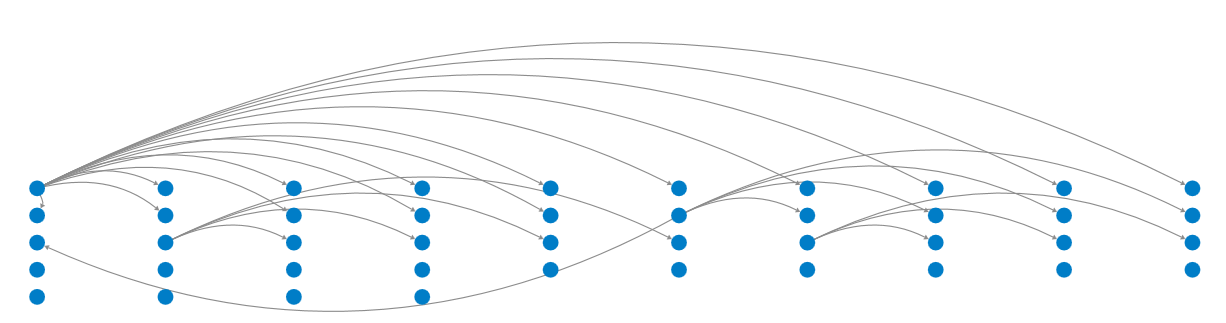
Partners of the project are Gelders Orkest, Philharmonie Zuid-Nederland’ and Het Sociaal Fonds Podiumkunsten. The project will unfold over the period 2018-2019 and is a collaboration initiative initiated by the Radboud Centre for Organization Restructuring. The funding agency NWO is the Dutch Organisation for Scientific Research supports a strong system of sciences in the Netherlands by encouraging quality and innovation in science. Its conviction is that scientific research contributes to prosperity and well-being and that it provides for a growing need for knowledge in the face of societal challenges, for economic development and to better understand ourselves and the world.